




Batik Instructions

Introduction

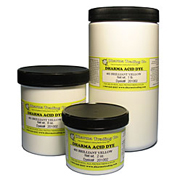
Batik is one of the "resist" processes for making designs on fabric, like Tie Dye, Shibori, Serti technique, etc., using wax on fabric to prevent dye from penetrating the cloth. Wax is applied to fabric, followed by dye, perhaps in many successive layers in complex Batiks. Batik is especially unique because the wax will crackle during handling, either intentionally or not. On subsequent dye baths, the crackles in the wax fill in with darker colors. Batik can be done with many types of dye & waxes on cottons, silks and other natural fabrics, particularly the finer weaves for detail work. "Faux" batik employs types of water soluble resists that are easier to remove than wax (and safer to work with for children), but never quite achieve that beautiful crackling. The following discussion will involve using Dharma Fiber Reactive MX Dye Powder on cotton, but can be adapted to other fabrics or dyes. The basic principles remain the same.

Batik masters employ a process of repeated waxing and tub dyeing to achieve the final result. This method requires mastery of color mixing and over dyeing, as each layer of dye is applied over the last, producing a mixed color. After many different applications, the background usually comes out dark brown, black or gray. The waxed areas remain the lighter shades produced by each individual application and combinations thereof. The Tub Dye technique is described below in more detail.

An easier method of batik, especially for beginners, is the Paint-on method. This method has fewer steps and allows for great variations of color and shade without having to master the complicated blending of successive layers of color. If you have painted on silk using the Serti method, this will be familiar to you. Wax is applied to outlines and other portions of the design that are to remain white later. Dye is then painted on in many colors to areas inside the waxed lines, allowed to set and the fabric is washed and dried. The whole design is then waxed over and the background is dyed by immersing the fabric in a dye solution (the tub dye method). The simpler Paint-on technique is discussed below.

A third method is so called "Faux" batik, mentioned above, which we will discuss last. Teachers of young children prefer this method because it employs other types of resists instead of hot wax. Not only are the resists easy and safe to work with, but they wash out with plain water. Because of that, they may not be submersed in a dyebath. Instead, dye or thin Fabric Paints can be applied with brushes, or sprayed on, etc., fixed according to their directions, and the whole thing washed out. If paints are used, they are totally non-toxic, and there are no associated chemicals (except perhaps Versatex No Heat Fixative if you don't want to heat set the paint). The "Faux" batik technique is described below.

Wax and Tub Dye Method

This method requires a great deal more confidence in color mixing theory. Layers of wax and dye are repeatedly applied to the fabric, yielding an overlapping color design that goes from light to dark, bright to dull.

  1. Pre-wash your fabric to remove any impurities that might interfere with dyeing. We recommend using Synthrapol for this.
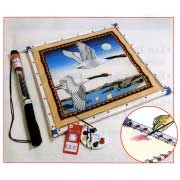
  2. Stretch the fabric on a Frame or Hoop that will keep the fabric flat and horizontal.
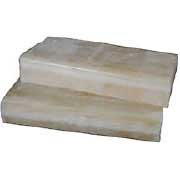
  3. Melt premixed Batik Wax, or your own combinations of Beeswax, Sticky wax and Paraffin waxes. The more paraffin, the more the wax will crackle. Beeswax and Sticky wax don't crackle by themselves, and Paraffin crackles too much. The wax mixture should be melted in a double boiler, electric wax pot, or old electric frying pan set at about 220-230° (CAREFUL! If you heat the wax over 240°, it can give off toxic smoke or burst into flames!) Work with hot wax in a well ventilated area (it gives off fumes), and never leave hot wax unattended!! In case of emergency, you can douse the flames with baking soda, NOT water. However, if you use the appliances recommended above, you should be able to control the temperature of the wax safely. We never recommend using pots directly on the stove! Some folks are trying out our new Soy wax, which is melted in a double boiler and melts at a much lower temperature than the other waxes. It is not as sturdy as the other waxes, but folks are working with it's limitations because it is a renewable resource and totally non-toxic, including the fumes.
  4. Use Tjanting tools to apply melted wax to any areas that are to stay white.
  5. Use natural fiber brushes to fill in areas. In Indonesia, wax designs are repeatedly stamped onto the fabric with intricate metal stamps made of copper called Tjaps or Caps (pronounced "chops"). When applying wax, no matter what method you are using, regulate the temperature so that it penetrates the fabric, not so cool that it just turns yellowish and sits on top, and not so hot that all your lines spread out too much. The wax should have a clear appearance, indicating it has penetrated to the other side. Flip fabric over and apply wax anywhere it has not. Thin layers of very hot wax will often allow some dye to stain the fabric under the wax, whereas a thick buildup will keep the wax off. You can use this knowledge to apply your wax creatively for shading effects.
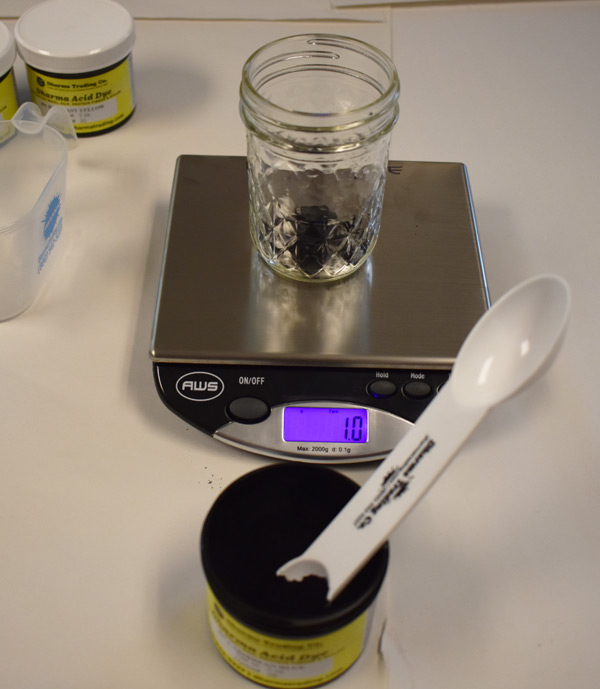
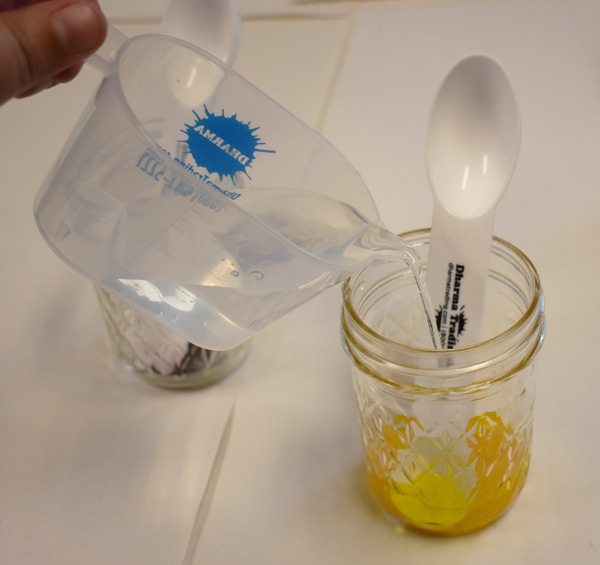
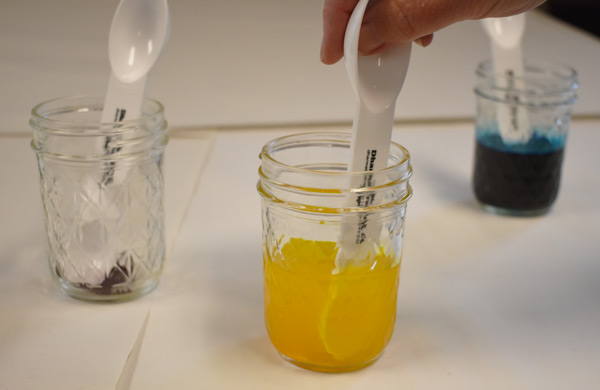
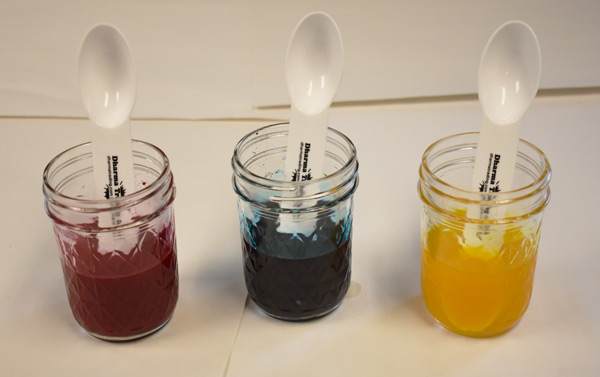
  6. Mix up Dharma Fiber Reactive MX Dye Powder dye solution as instructed for tub dyeing.
  7. Tub dye the fabric, first using the lightest or brightest color that will be on the piece and will mix well with successive colors, ie. like a yellow, then the next dye bath could be turquoise, which would actually mix with the yellow to dye the fabric green in all the unwaxed areas. Remember - after Soda Ash has been added to the dyebath, don't leave your waxed fabric in for more than 30 minutes more, as soda ash eats away the wax eventually, exposing areas to unwanted dye.
  8. Rinse and gently hand wash the fabric in Synthrapol and allow to dry. Use lukewarm water so as not to melt your wax!
  9. Repeats steps 2-6 above for each color you plan for your batik, waxing areas after each dyebath that you want to remain that most recent color, and re-waxing any areas that look eroded from the Soda Ash. Tub dye your darkest areas last.
  10. The final mix of colors at the end will be a brown, grey or black, combining all of the colors used on the piece. Hint - Do a test strip 1st with all of the colors you are planning to use to make sure they are combining like you want.
  11. Wax removal can be accomplished in one of five ways:
    1. Take it to the dry cleaners and let them get it out. (Many won't do it for you, and some have said that the new more environmentally friendly chemicals are not working so well for this)
    2. Boil the wax out. This is the oldest form of batik wax removal. Choose a pot that will comfortably hold your fabric and fill with water and a dash of Synthrapol or other liquid detergent to get the wax and any remaining excess dye away from the fabric. Bring to a simmer and add fabric. Use something to stir the fabric around in the boiling water and keep it submerged. After a few minutes, the wax will melt out of the fabric and float to the top. When the wax seems completely removed from the fabric, remove from heat and allow the water to cool. Be sure that the fabric sits on the bottom of the pan, avoiding the floating wax residue. You can weight it down with rocks or something. Allow to cool, then peel the hardened wax off the surface and remove the fabric. In Indonesia, people skim the hot melted wax off the boiling vats with big perforated ladles. Whatever works!!
    3. Iron the wax out. This is also a traditional wax removal process. The fabric is sandwiched between layers of absorbent paper and heat is applied by iron, to melt the wax out. This process often leaves a wax residue (looks like a grease spot) that is very difficult to remove, so it is not recommended. This method is often used for complex wall hangings that end up with so much wax on them that the whole thing gets a translucent appearance after ironing.
    4. Use hot tap water. Hang the finished piece on a line. Attach a hose to a hot water spigot, turn your water heater up all the way and gently run a slow stream of hot water over the piece to melt the wax off. Do this to all surfaces. A collection tub should be placed under the fabric to catch the wax and water. Best done outside!
    5. If you are working on silk, and going to steamset a silk dye, roll your piece in extra absorbent paper. It will absorb a lot of the wax while the piece is steaming. Any leftover can be removed by one of the steps above.

Paint-On ("Cold Batch") Technique

The steps for this process are few and relatively easy, but care must be used to ensure consistent and predictable results.

  1. First, pre-wash your fabric, ideally with a professional dyer's product called Synthrapol and/or an enzyme detergent. This removes most oils, sizing, and pre-shrinks the fabric.
  2. Soak fabric in solution of Soda Ash fixer (to fix the dye). Let dry completely so the wax will adhere.
  3. Stretch the fabric - this is easiest on a Stretcher Frame that will keep the fabric flat and horizontal and suspended. You can also use a cardboard box lid that is large enough for your fabric that has been waxed with some of your wax first. When you wax your fabric, it will sort of stick, but you just peel it off later. This wax layer keeps the dye from going into the cardboard and getting on your piece where you don't want it. Use stainless steel push pins or silk thumbtacks to stretch the fabric. If doing clothing, make sure you have something between the layers so wax and dye don't bleed through to the other side.
  4. Melt premixed Batik Wax, or your own combinations of Beeswax, Sticky wax and Paraffin waxes. The more paraffin, the more the wax will crackle. Beeswax and Sticky wax don't crackle by themselves, and Paraffin crackles too much. The wax mixture should be melted in a double boiler, electric wax pot, or old electric frying pan set at about 220-240° (CAREFUL! If you heat the wax over 240°, it can give off toxic smoke or burst into flames!) Work with hot wax in a well ventilated area (it gives off fumes), and never leave hot wax unattended!! In case of emergency, you can douse the flames with baking soda, NOT water. However, if you use the appliances recommended above, you should be able to control the temperature of the wax safely. We never recommend using pots directly on the stove! Some folks are trying out our new Soy wax, which is melted in a double boiler and melts at a much lower temperature than the other waxes. It is not as sturdy as the other waxes, but folks are working with it's limitations because it is a renewable resource and totally non-toxic, including the fumes. You can read more about Soy wax here.
  5. Apply the wax, using tools like the Tjanting (also known as canting) to make outlines. When applying wax, no matter what method you are using, regulate the temperature so that it penetrates the fabric, not so cool that it just turns yellowish and sits on top, and not so hot that all your lines spread out too much. The wax should have a clear appearance, indicating it has penetrated to the other side. Our Electric tjanting can be regulated, so it maintains the wax at the correct temperature. When done, check the back of the piece and apply a little wax anywhere it didn't penetrate.
  6. Mix up Dharma Fiber Reactive MX Dye solutions as instructed for the cold batch method. This will yield a dye paint which can be directly applied to the fabric. Paint the dye on the fabric where your design will be, using the wax lines to hold the dye within each area. Thickening the dyes per the instructions helps them not to break through the wax outlines, which can develop cracks, as per the nature of wax! Keep piece damp and allow the dye to cure for the required 6-24 hours (6 hours for pastels & silk, 12-24 hours for deep shades). Curing should be done horizontally to avoid streaking and running.
  7. After the dye has cured, the fabric must be washed, to remove excess dye. This washing step is very important, as any dye left on the fabric will make a nasty mess when the final wax removal step is done. Rinse quickly and carefully in running cool water until it runs pretty clear, then hand wash in lukewarm water with Synthrapol, then allow the fabric to dry.
  8. If a colored background is desired, wax can be used as a cover for the entire design. After step 6 above, when the fabric is completely dry, re-stretch and spread wax over any areas which you wish to remain the current color, then follow our instructions for tub dyeing (or tie dyeing, for more interesting background). **Allow fabric to soak in dye bath after adding the soda ash for no more than 30 minutes or your wax will start to erode.**
  9. Remove the wax as described in one of the steps above in the tub dye method.

"Faux" Batik

Great for classroom situations and teaching young children!

  1. Stretch fabrics as above to keep flat and horizontal.
  2. Apply a water based resist such as Inko Resist or Presist, using Gutta applicators with tips for outlining. For covering large areas, you can paint it on, stencil it on, block print or screen print.
  3. If using Dharma Fiber Reactive Dyes for cotton, follow instructions above for painting it on. Remember, these resists are water soluble, so you can't submerse your projects in any kind of a dyebath.
  4. For a hassle free project that is less time consuming, you can use a totally non-toxic thin fabric paint instead of dye. Examples are Dynaflow, Setasilk and Jacquard Marbling(Airbrush) Ink. For synthetic fabrics, you can use Pigment Dye also. After the resist is applied, you can apply the paints with foam or natural brushes, or even spray it on.
  5. After the paint is dry, heat set it with an iron according to the directions of the paint you chose, or, try our Versatex No Heat Fixative, and cure the project 4-6 days.
  6. Wash the piece out with warm water and Synthrapol or any other gentle soap to remove the resist.
  7. Take great pictures of the kids proudly holding up their projects!


Home | Gift Certificates | Order From Catalog | Request a Catalog | Report a Problem
Join Our Mailing List | Customer Service | Track an Order | My Orders | Email Page to a Friend
If you'd rather speak with a human, please call toll-free from anywhere in the U.S. or Canada 8am to 5pm PST
Phone: 800-542-5227
Copyright © 2006 Dharma Trading Co. All Rights Reserved.
(Hey, it ain't much, but it's ours.)
Have an account? Please sign in