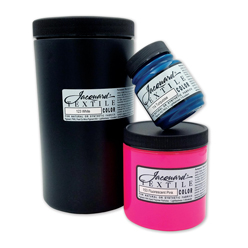
USE FOR: Textile hand painting, airbrushing (thinned), block printing and stenciling. Useable but difficult for marbling - use the NEW Jacquard Marbling Colors instead
USE ON: All Natural and most Synthetic Fabrics
Product Details
List Price
1-9
10+
2 1/4 oz. priced as low as...
$5.79
$3.75
$3.25
8 oz. priced as low as...
$17.99
$12.95
$11.49
32 oz. priced as low as...
$49.99
$36.75
$33.25
Jacquard Textile Colors are a medium consistency fabric paint that delivers great value for your money. These colors leave your fabric as soft as possible. The color is intense and semi-opaque. This product is absolutely colorfast on natural or synthetic fabrics when heat-set by ironing according to the manufacturer's directions, or fixed with our No Heat Fixative for paints or Jacquard's Airfix.
Click here to add or update a review for this product.
MOST HELPFUL REVIEWS
7/12/2008
5
Easy to use and doesn't smell bad. Inexpensive with very bright colors. I recommend this paint for beginners and those on a budget.
Was this review helpful?
15 of 15 users found this review helpful.
5/22/2009
5
I like this the best of all fabric paints. It thins beautifully layers well and cleans quickly.
Was this review helpful?
14 of 14 users found this review helpful.
6/23/2011
5
Really good product. I used it to spray my dining and kitchen chairs that was faded due to time. Combined with the no heat fixative it's like I have brand new chairs. I over estimated and should have bought 2 quarts instead of a gallon for 10 chairs. I will definitely order another color to do my living room sofa.
Was this review helpful?
12 of 12 users found this review helpful.
7/29/2011
5
I used this paint on a faded 7 year old nylon outside flag (on the nylon letters only) with the versatex fixative in it and it really looks good. It is holding up to the wet weather. Make sure the area you paint is free of dirt and any fabric sizing. (follow directions) My flag has been through two rainy days. So far it's held up. Getting ready to do another advertising flag.
Was this review helpful?
10 of 10 users found this review helpful.
5/5/2009
5
I enjoyed using this textile paint. It was easy to apply (stenciling) had good flow and coverage and lasts through the wash. Great color choices and my customer loved the end-product.
Was this review helpful?
13 of 15 users found this review helpful.
MOST RECENT REVIEWS
6/2/2022
5
I have been using the Jaquard solarfast for years to paint fabric since it doesn't bleed or fade but recently transitioned to these textile paints and am very impressed with them. Not only are they easy to paint with they can also be watered down without bleeding or fading too much. The color comes out dark and as displayed in the jar. The other major perk that exceeded my expectations was that once ironed and washed the fabric was left soft with no color fading.
Was this review helpful?
2 of 2 users found this review helpful.
11/12/2016
5
Awesome Paint!We used this paint for one of our three huge quilts with adult hand prints. The other two had the so soft opaque which I chose because it didn't need to be heat set. I couldn't get the colors I needed for the third quilt so I got this. Both paints were exceptional but I think I liked this one better. It is a little thinner and I liked the way it spread on the hands a little better. (even though the other had a nice little squeeze spout) Clean up was a breeze and the coverage is great. The fabric was soft even before washing. Heat setting was easy. I used a piece of foil under & over the fabric with both shiny sides towards the fabric. You will not be disappointed with either product but I enjoyed this one better.
Was this review helpful?
4 of 4 users found this review helpful.
4/28/2016
5
Great product easy to work with!
Was this review helpful?
0 of 0 users found this review helpful.
11/30/2015
5
I had the privilege of creating a comic character (Poison Ivy - the New 52) to cosplay with my daughter. All black body suit with ivy covering a swirl down around her body. Costume came out ahhhhmazing. I dont know what I would have done without this product.
Was this review helpful?
2 of 2 users found this review helpful.
9/8/2015
5
I ordered many colors of the Jacquard Textile paints...all were excellent quality and vibrant strong colors. They covered the materials easily and were easy to blend and mix. Perfect!
Was this review helpful?
5 of 5 users found this review helpful.
7/21/2015
5
Looks so strong - fuchsia really - in the bottle but "waters down" (I added water for a water-color effect but to preserve the paint effect on would use white to the same effect) fades out to a beautiful clear pink almost back-lit. Stunning color and so versatile.
Was this review helpful?
2 of 2 users found this review helpful.
7/21/2015
5
What a glorious shade of blue! It "waters down" well and goes from a rich Aegean blue (full strength) to an almost back-lit sky blue. Excellent product!
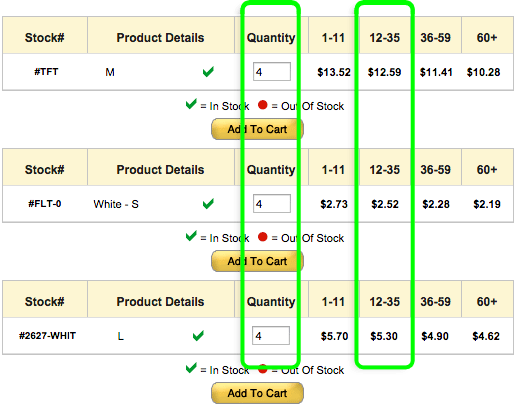
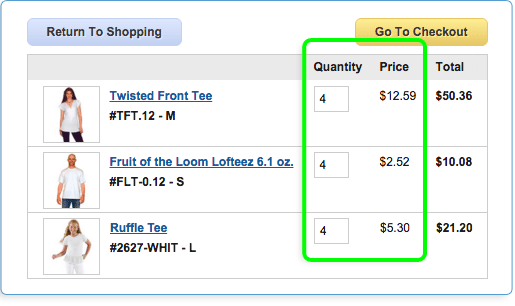
You can combine cotton and rayon clothing & accessories to get the greatest discounts.
Your discount is figured on the total number of cotton and rayon items we ship, not how
many of each type, style or size. Mix and match them to get the best discount.
Example: adding 4 each of 3 different T-shirts in any sizes will give you the 12+ price on all 12 shirts.
Some products may be excluded from discounts, and / or may discount only with themselves.
If you have any questions at all please contact us toll free at 800-542-5227 (no buttons,
just humans).














 Item Added to Cart
 Item Not Added