


USE FOR: Tie-Dye, Tub Dyeing, Low Immersion Dyeing, Batik, Dye Painting, Silk Painting, Screen & Block Printing or Stenciling, even Tie-dyeing Silk in a Microwave USE ON: All natural Fibers (Cotton, Rayon, Hemp, Silk, etc.), Wood, Cane, and Rattan

Since 1969 Dharma Trading Co. has been the #1 source for dyes for Tie-Dye
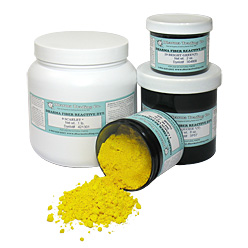
When all is said and done, there is no better dye for natural fabrics than Fiber Reactive Procion type Dye. This is the dye you've seen on many shirts and other items sold on the street and at concerts.
All 110 colors are brilliant, mouth-watering, and permanent. They don't fade, even after repeated washings. They are economical, safe, and easy to use. Superior to supermarket dyes in every way! Buy in small quantities, in bulk, or in kits.
Colors below are intended as a guide, as computer monitors and dye results on different fabrics or with different techniques, (or even different water chemistry), can vary. If you need a really specific color, it is good to test on a small scale first!
If you have never used these dyes before, you need to know that certain chemicals are required (like Soda Ash Fixative) and others are recommended, for these dyes to work properly. Click on the Product Description link above (or scroll below the order form) to find links to instructions for all the different techniques you can use these dyes for. Read the instructions for your chosen technique(s) to see what else you will need.
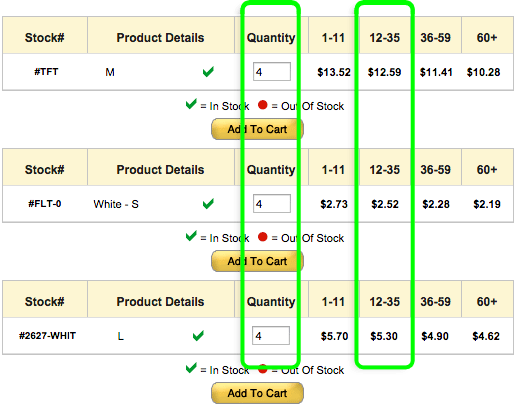
Prices begin at $2.95 and vary by color and size. See the order form below for specifics. Even better discounts are available for 50 or 100 lbs of a color - call for details.
Our Dharma Fiber Reactive dye is the dye of choice for all cellulose fibers, like cotton, rayon, hemp, bamboo, Tencel, etc. They are even sometimes used for silk because they are so economical. This is the dye you've seen on tie-dyes on the street, at fairs, festivals and concerts - the colors are brilliant and permanent. They don't fade, even after repeated washings. Because they don't come off, they are even safe on infant clothing, once properly washed out.
They are economical, and easy to use. Superior to supermarket dyes in every way! Buy in small quantities, or in bulk or in kits. Dharma Fiber Reactive Procion type Dyes are good for all the techniques listed below and more!
Colors above (from samples done on cotton) are intended as a guide. They may
vary from monitor to monitor (depending on the quality and your personal
settings) and may not match actual dyed fabrics. Some colors can shift
dramatically on proteins such as silk and wool (for example, black gives a
lovely maroon or brown). Colors can shift due to water conditions,
temperature, etc., and dyelots can vary sometimes. When your end color needs
to be very specific, we recommend a test first, before dyeing your main
project or going into production. All of the colors can be mixed for an
endless pallet!
What makes Fiber Reactive dyes unique from other dyes? What are all the different ways to make it permanent ("fix" it) on cellulose, and on protein.
Answer:
Fiber reactive dyes, like Procion MX, bond with the fiber at a molecular level, becoming chemically part of the fabric.
On cellulose soda ash is the primary fixer. On protein you can use soda ash,but it can damage silk if you soak it for long periods of time. We also recommend using less soda ash for tie dye and tub dyeing. (Let the tie dye sit for a shorter period of time, ie: 4 hrs.) Also, colors may shift on silk. Blue does not combine well with silk, causing all mixes with blue in them to shift toward the other colors in the mix, ie black goes brown or maroon, purple goes raspberry, forest green goes chartreuse, etc..
Vinegar or baking soda can be used with silk as a substitute for soda ash. They require heat for vat dyeing and steam setting for direct application. Some folks use the microwave in creative ways. Procion is not highly recommended for wool as many of the colors break down under the high heat that wool needs in order to dye properly.
Question:
I'm a novice dyer and I'm having trouble with one of the Procion MX dye colors in a dyebath situation. The color is not what I expected. What are the variables that can help me find out what the problem is? When is the problem "fixable" and when is it not?
Answer:
What are you dyeing: cotton, linen, hemp etc.?
* What color is it before dyeing?
* What color did you buy?
* Do you have hard water?
* How much does the fabric weigh?
* How much water did you use and how much salt?
* Is the salt plain or iodized?
* How much dye did you use?
* What temperature is the water?
* Did you follow the directions accurately?
* Is the color too light? Dye again
* Is the color too dark? Discharge or bleach and then dye again. This may require a change of color choice.
* Colors are spotty or streaky? Not enough room in the dyebath or not stirred enough. The garment or fabric possibly not totally clean before dyeing. Dry chemicals and salt not dissolved well before entering the dyebath. Solution? See Color too dark.
* Wrong color entirely? Over dye for a different color, or see Color too dark.
* Most problems can be fixed if you are willing to take the extra time and effort.
Question:
Why is mixing dyes to achieve desired colors different from mixing pigments? When looking at dyes or paints, how would you determine what the "primary colors" are (if the catalog didn't tell you). If I want to mix all of my own colors of procion mx dye, how many should I get and what colors would you recommend?
Answer:
Dyes are transparent, pigments are not. Pure colors in dye (primaries) are colors that cannot be mixed from other colors but can be used to create a variety of colors. Primaries in pigments are generally pure colors. Procion lemon yellow, fuchsia and turquoise are the primaries. Pigment primaries are yellow, true red and true blue. To mix all your own colors, we would recommend lemon yellow, fuchsia and turquoise, with the addition of navy, cerulean, cobalt and sky blues. Include golden yellow, fire red, scarlet, chinese red and new black. With the possible choices of maroon brown and deep orange. All fourteen colors should give you plenty of options.
Question:
Which is the best fiber reactive black dye to use?
Answer:
We have 4 black fiber reactive dyes, each with a different color cast. They all work well in direct application methods like tie-dye where the fabric is kept moist long enough for the dye to develop full depth. You will see, however, some differences depending upon which one you use and your particular situation and techniques. When vat-dyeing (when you are dyeing a solid color shade) there are some differences:
#39 Black- vat dyes with a green cast and edges are blue in tie dye.
#44 Better Black-vat dyes with a purple-blue cast and edges are blue in tie-dye.
#250 Jet Black-This is the most concentrated of all the blacks and gives the deepest black when used in vat dyeing with hot tap water (130-150F degrees). Edges are green in tie-dye.
#300 New Black-Vat dyes with a very blue cast and edges are blue/pink in tie-dye.
Black is a tough color to get. You have to use a lot of dye and in vat dyeing, you need to double the salt.
We recommend a 1/2 and 1/2 combination of #44 and #300 for the blackest black in tie dye.
Question:
What does the Soda Ash do in a dyebath?
Answer:
When you add salt and dye to the dyebath along with the fabric the absorbed dye is locked in the fabric so it will not wash off. The color becomes permanent by adding a solution of dissolved soda ash to the dyebath raising the pH of the water. This allows the dye molecules to react chemically with the fiber molecules. It takes about an hour for this reaction to occur fully and set the dye.
Question:
What does the salt do in a dyebath?
Answer:
The salt helps the dye stick to the fabric. The greater the amount of salt used, the higher the absorption and the deeper the color will be.
Question:
What is Afterfix and how do I use it?
Answer:
Afterfix sets the Procion Dye in the fiber after you have painted the dye on. Just mix the dye with water and a little thickener and paint with it on your fabric. When it's dry cover the painted area with Dharma's Afterfix by painting it on over the dye. After an hour, wash out the Afterfix and the excess dye.
Question:
What does Glauber Salt do?
Answer:
Glauber Salt improves the yield of Turquoise in that it gives more intense color. Use it in place of and in the same proportions as plain salt when dyeing solid shades of Turquoise or colors mixed with Turquoise.
Question:
What is Ludigal?
Answer:
Ludigal is a mild oxidizing agent that helps to prevent dyes from decomposing during fixation.
Question:
What is a fiber reactive dye and what does this mean?
Answer:
Reactive dyes take their name from the fact that they chemically react with the fiber molecules to form a dye-fiber bond. This strong bond between the dye and the fiber imparts excellent wash- and light-fastness. These dyes require two auxiliaries; first salt which acts as an electrolyte that reduces the solubility of the dye. If the dissolution of the dye is controlled in this way a more even dyeing will take place as the dye will be absorbed in the fibers at a steady rate, rather than all at once. The second auxiliary required is soda ash which increases the pH of the dye bath which enables the dye to react with the fiber molecules and fix onto the cloth.
Question:
The dye instructions for Procion Dye tells me to use various amount of salt, urea and oil. What are these additives for?
Answer:
Salt is used in the dyeing process as an electrolyte that aids in the absorption of the dyes into the fabric. Urea is a "moisture drawing" agent which keeps the fabric damper longer during the fixing process, thereby making for deeper, brighter colors. Oil, such as calsolene Oil is a wetting agent used when dyeing tightly woven fabrics for increasing the evenness of dyeing.
Question:
Can I dye wood or reed?
Answer:
Yes you can. First be certain there is no residue or finish on the wood or reed to prevent the dye from seeping in. Determine the amount of water needed to cover the material. For each gallon of water add 1 TBL. of Procion dye (pre-dissolved) and 1/2 cup plain salt. Mix thoroughly. Put material to be dyed into dyebath and turn frequently for 20 minutes. Add 1/3 cup of Soda Ash for each gallon of water used. (Pre-dissolved in hot water and add slowly). Leave in dyebath for up to 2 more hours or until the desired shade is reached. Rinse under running cold water to remove excess dye and dry.
Question:
What is the Cold-Batch Method? How do I dye using this method?
Answer:
The Cold Batch Method:
For applying the dye directly onto the fabric.
Excellent for the Dye painting, Serti technique on silk and Ikat warp painting on wool or cotton as well as just painting.
The following method for using Dharma Fiber Reactive Procion dye is one of the best ways to paint the dye directly onto the fabric. The dye can be thickened with DyeHouse Thickener and used like a fabric paint or the thickener can be left out for water color and wash effects and for the French Serti technique of painting on silk. This method does not require any pre-treatment of the fabric, but the fabric must be "cured" after dyeing, and after mixing up the dye, it must be used up that day.
The first step is to make a cold batch chemical water which can be stored a month or more in the refrigerator. (Make sure it's sealed and labeled!)
The chemical water is made by mixing the following ingredients together:
1. 3/4 cup Urea (dissolve in hot water if necessary)
2. 1 quart water (add a little Water Softener if needed)
3. Add Thickener (sodium alginate) gradually to suit your use, from a tsp up to 4 tsp. Start with one tsp and add more very gradually while you stir to avoid lumps. Allow to set for 2 hours or over-night as it will continue to thicken.
Pour off the amount of chemical water you need for one color (for ease of measurement use 1 cup increments).
To each cup of chemical water add:
1 tsp. Soda Ash Fixer (be sure it dissolves)
Dye to taste (try a pre-dissolved concentrate and drip & stir until color is right).
Do the above for each color you intend to use. Don't mix more than you need for one work session as the addition of the Soda Ash Fixer commences the chemical action and it begins to set, the mixture gradually loses strength and four to six hours later is about half exhausted.
Using the freshly mixed colors paint or print directly onto the fabric.
Let it dry until damp, cover or wrap in plastic or otherwise stop the drying process and let sit for:
12 hours for pastels
48 hours for deep shades
Rinse in running cold water then wash out excess dye using Synthrapol and let dry.
Question:
Which dyes work best on cellulose, silk and wool?
Answer:
Procion® MX - For painting or tub dyeing. Dyes the cellulose (cotton/hemp) like the color chart. Often the protein(silk) comes out a different color, especially colors with blue in them-most of the blue will be absent on the silk- so for example, with #18 deep purple, you would get purple pile (the rayon) and raspberry backing (the silk) on devore velvet. Very cool!! Careful, soda ash is hard on the silk. Limit the time of exposure, or use baking soda instead, and steam, microwave or simmer on the stove.
Procion® H -For painting. Dyes the cellulose and the protein the same color.
Acid Dye for Wool and Silk - For tub dyeing. Dyes the silk really well, stains the cellulose a much lighter shade.
Question:
What's the difference between Dharma Dye Fixative, Retayne, and Dharma Afterfix.
Answer:
Afterfix is Sodium Silicate, a liquid with the consistency of honey. It is an alkali like Soda Ash (Sodium Carbonate) or Baking Soda, only a liquid. Its use is in the "fixing" of Fiber Reactive Dyes, the creation of an alkali environment in which the cellulose and the dye are able to permanently bond together. In vat dyeing, the Ph of the liquid in which the fabric is submerged is changed to about 10.5 at an appropriate point by the addition of soda ash. Afterfix is used by painting it on the fabric over the painted on dye thereby creating a kind of tiny alkali dyebath around each thread.Dye fixatives are cationic agents that work by bonding to the dye molecules within the fiber matrix and "bulking them up"; this "swelling" of the
molecule traps it in the fiber and thus makes it significantly more fast.
Given this mechanism, dye fixatives are useful with a wide
variety of dye types (basically anything that penetrates the fiber matrix
and can be wedged there). The amount used is determined by the amount of
fabric (and thus the number of dye molecules that need to be bulked.
Dharma Dye Fixative is an industrial "Fixing Agent" used in the dyeing industry as an after-treatment of reactive and direct dyeing. It is intended to improve washfastness, fastness to seawater and perspiration, prevent dye migration during dyeing and improve crockfastness. It is used by rinsing purchased or dyed fabric for 15 minutes in a solution of cool water and about 1 oz. fixative per lb of fabric.
Retayne is also a "Fixing Agent", similar to the Dharma Dye Fixative.
There are many patterns to create with tie-dye. In fact, it's been said that no two are the same. Here is a simple tutorial on how to make one of the most popular designs: the spiral.
Sharon and Janet take you through the steps of using one of our Indonesian Copper Batik Tjaps as a 'resist stamp' using wax. A must try for all you batik buffs!
This project is intended to assist you in making you very own quilt! What we hope to illustrate is a method you can use to begin with a clean canvas and create the squres you desire to make a quilt that is entirely your own design.
There are so many ways to use our Indonesian Copper Batik Tjaps! Here is a step-by-step tutorial showing the use of Presist (a casava paste water based resist) and a Tjap on cotton fabric.
Discharging velvet is an easy task that yeilds excellent results. In this tutorial, Judi takes you through the 8-step process of how to discharge and dye a scarf.
Decorations can make an evening and we have a way to get your guest swooning! We used one of our Copper Batik Tjaps to make a dinner table to remember.
Click here to add or update a review for this product.
:
(56)
:
(6)
:
(6)
:
(5)
7/14/2008
We've been using this dye for years and definitley worth the extra effort (mixing chemicals like a mad scientist!). We used syringes (without the needle) to make awesome colors - just slurp up a bit of this and a bit of that and some water and you can get some outrageous colors, but not too much of it, so it saves dye. Thumbs up.
Was this review helpful?
13 of 13 users found this review helpful.
4/29/2008
I sing the praises of this dye! I have my favorite shirts I have dyed with this dye years ago where the shirts are wearing out, but the color looks like it did when they were freshly done! It was harder to do than the 60s with Rit, and a learning curve, but the results are really worth it. And some of my "mistakes" turn out to be what I get the most complements on. I love learning how the colors come out on different fabrics too. Lots of fun!
Was this review helpful?
12 of 12 users found this review helpful.
5/15/2008
Lovely colors, easy to use if you do your research. Stay bight and clear through many washings. Wonderful to make quilting fabrics with. Fun to mix and create new colors, and be as creative as you wish to be. A plus is the customer service!!!
Was this review helpful?
10 of 10 users found this review helpful.
7/12/2008
The best dye for tie-dye, batik, fabric dye painting, etc. Colorfast for years, easy to use and inexpensive. I absolutely recommend it.
Was this review helpful?
8 of 8 users found this review helpful.
1/27/2009
I have only been tie-dyeing for a couple of months, but I have to say these are THE dyes to use! Recipients of my tie-dyed Xmas gifts were most effusive and several expressed amazement that I was a novice tie-dyer. Several times I repeated that having GOOD SUPPLIES can make all the difference!
Was this review helpful?
6 of 6 users found this review helpful.
7/29/2010
very pleased and very easy to work with.
Was this review helpful?
0 of 0 users found this review helpful.
7/29/2010
Haven't used any better dye---ever!!!!
Was this review helpful?
0 of 0 users found this review helpful.
7/29/2010
Good selection of tie-dye colors. The clothing holds their colors and stays bright or subdued which ever you pick to use.
Was this review helpful?
0 of 0 users found this review helpful.
7/29/2010
Love these Dyes. Got the shipment just in time to produce July 4th shirts as a neighborhood project. Service is outstanding!
Was this review helpful?
0 of 0 users found this review helpful.
7/29/2010
Good selection of tie-dye colors. The clothing holds their colors and stays bright or subdued which ever you pick to use.Thanks, Pat
Was this review helpful?
0 of 0 users found this review helpful.
7/29/2010
These dyes are incredible - properly washed - they will not run or fade. I have items I dyed years ago that are still as bright as when I did them originally.
Was this review helpful?
0 of 0 users found this review helpful.
7/29/2010
I am always happy with my order from Dharma! I tie dye with a camp of children with heart problems and they are always so excited to get their shirts back after I wash them!!
Was this review helpful?
0 of 0 users found this review helpful.
7/29/2010
These are the best dyes ever for all my tie dying projects.....Just amazing results!